
“Be like water.”
I never set out to build an empire. Growing up in Malaysia, my vision for life was refreshingly simple: find a stable job, start a family, live quietly. While others chased grand ambitions, I was content to flow where life took me. Then came an invitation that changed everything.
The expected path.
University passed in a comfortable blur of studies, basketball games, and late-night gaming sessions. After graduation, I followed the expected path into a respectable position as an assistant engineer at an oil palm company.
Steady advancement. Predictable raises. A life of reasonable comfort.
“Want to work in America for a few months?”
An opportunity to see the world.
When my friend suggested a work-and-travel program in the United States, it triggered the adventurous (or rebellious) part of me. In 2011, I found myself at Zion National Park, surrounded by towering red cliffs and an international cast of colleagues from around the world. For four months, I experienced a completely different environment and way of thinking.
“What kind of future could I build that wouldn’t be limited by geography?”
Back to safety. Then a hint.
Returning to Malaysia, I did what seemed sensible. I found a stable job. For a while I was happy. But only for a while.
Until my brother Reeve showed me something intriguing: Flippa — an online marketplace where websites were bought and sold like digital property.
“We could do this,” Reeve suggested.
We purchased several websites, expecting instant success and passive income. After a few weeks waiting blindly, reality hit. A “product” is just one side of the equation. You still need traffic. Despite the failure, I recognised an opportunity to create websites specifically designed to be sold. In my spare time, I built and flipped websites — generating around $12,000 in a year. My first taste of online income.
Would you have continued?
Despite my early success with website flipping, I didn’t continue. My parents viewed my “online ventures” with skepticism. “Not a real career.” And I kinda agreed.
I returned to conventional career paths. For two years, I sold palm-oil machinery to mills. But something was missing. Do I want to spend the rest of my life driving around selling machines? I don’t think so.
Ship salvaging. And the wall.
The search led me to starting a ship-salvaging venture. The beginning was promising — new challenges, interesting projects, potential for good money. Until reality set in (again).
My business partner was great at securing projects but terrible at delivering them. Excuses piled up. Deadlines were missed. Clients became frustrated. Day by day, my savings disappeared into payroll and operations.
During Chinese New Year, I couldn’t afford the traditional red packet for my parents — something I’d proudly given every year since starting work. I decided to walk away from the business.
Finding my way “back”.

Unwilling to return to employment, I forced myself to pick up new skills. I started freelancing — taking up every project I could find: app development, email marketing, SEO, and so on.
Eventually, Reeve and I decided to start an agency in order to grow bigger (make more money). Our approaches couldn’t have been more different. As an introvert, I pushed myself to attend networking events and focused on personally delivering projects. Reeve, meanwhile, began “growth hacking” and experimenting with many different ways of getting clients.
The brick: “thinking too small.”

We struggled initially, targeting local Malaysian businesses with limited budgets and perspectives. The breakthrough came after attending Tony Robbins’ Business Mastery program. Among the many insights, one hit me like a brick: we were thinking too small.
“What if we focused on international clients instead of just local businesses?”
The idea was both exciting and terrifying. How could two brothers from Malaysia compete globally? The answer came through differentiation. While most agencies offered either brand design or direct response marketing, we saw an opportunity to bridge these worlds. Our approach combined aesthetic brand elements with conversion-focused design — creating funnels and landing pages that both looked impressive AND generated results.
Conversion Design.
The first international client.
Our first international client came through a Facebook group where I had been actively sharing insights. A marketing director from a U.S. company messaged me after seeing my breakdown of their competitor’s landing page.
“Your analysis showed me issues I’d never noticed. Can you help us redesign our funnel?”
That project became our case study. They referred us to three more businesses, and suddenly our international client roster was growing.
Building on success.
Success with one client led to another, then another. As we delivered results, word spread through the digital marketing community. High-profile clients began reaching out. Frank Kern. Ryan Deiss. Todd Herman. Donnie French at Performance Golf. We developed a reputation for combining beautiful design with performance-driven results.
Today, I run The Brand Funnels, our conversion-design agency specialising in landing pages, funnels and websites that bridge brand aesthetics with direct-response principles. Our focus on international clients has created a business that allows us to work anytime, anywhere, without limit.
Borderless careers, by design.
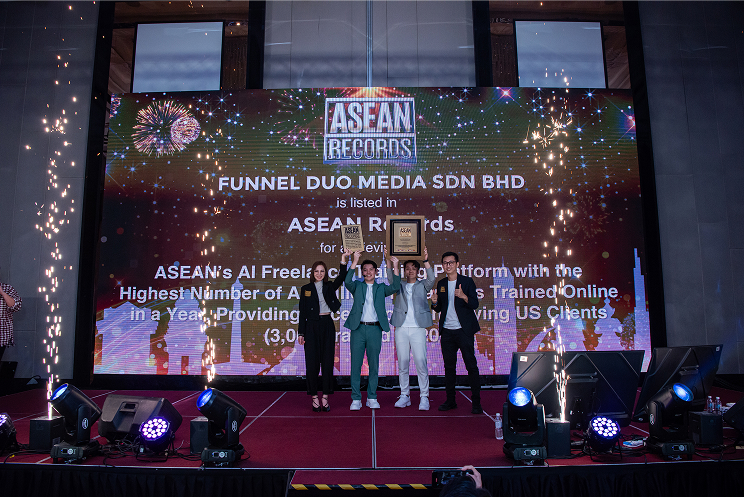
As more people saw the success behind our methodology, people around us started reaching out. Eventually, Reeve & I developed a teaching program to help Malaysian entrepreneurs create a freedom business through evergreen skills and client acquisition. Specifically, international client acquisition. A business without borders.
Watching students transform from absolute clueless to making money internationally mirrors my own journey. Looking back, I see how each chapter — even the painful ones — contributed to where I am today. The work-travel program expanded my horizons. The website flipping gave me my first taste of digital income. The ship-salvaging failure taught me about partnership and responsibility.
Each experience was a necessary step.